Commercial Roof Coating Systems for Missouri Facilities: A Comprehensive Engineering and Asset Management Guide
For commercial property owners, facility managers, and industrial stakeholders across the Show-Me State, managing overhead physical assets requires balancing immediate operational expenses against long-term capital expenditure outlays. The building envelope represents one of the most critical structural components of any operational asset, and within that envelope, the roofing substrate bears the brunt of regional weather patterns. Faced with extreme seasonal thermal swings ranging from humid, high-heat summer weeks to sub-zero winter fronts with heavy ice loads traditional low-slope or flat roofing membranes like EPDM, TPO, and modified bitumen eventually degrade, crack, and develop compromised seams. When a commercial roofing structure nears the end of its initial design life cycle, or begins showing systemic signs of moisture infiltration, facility executives often assume that a costly, disruptive tear-off and replacement is the only viable path forward. However, utilizing an advanced fluid-applied commercial roof coating Missouri system provides a structurally sound, highly sustainable, and financially advantageous alternative. This comprehensive technical guide details the mechanical attributes, financial returns, chemical configurations, and deployment strategies for fluid-applied architectural roof restoration membranes.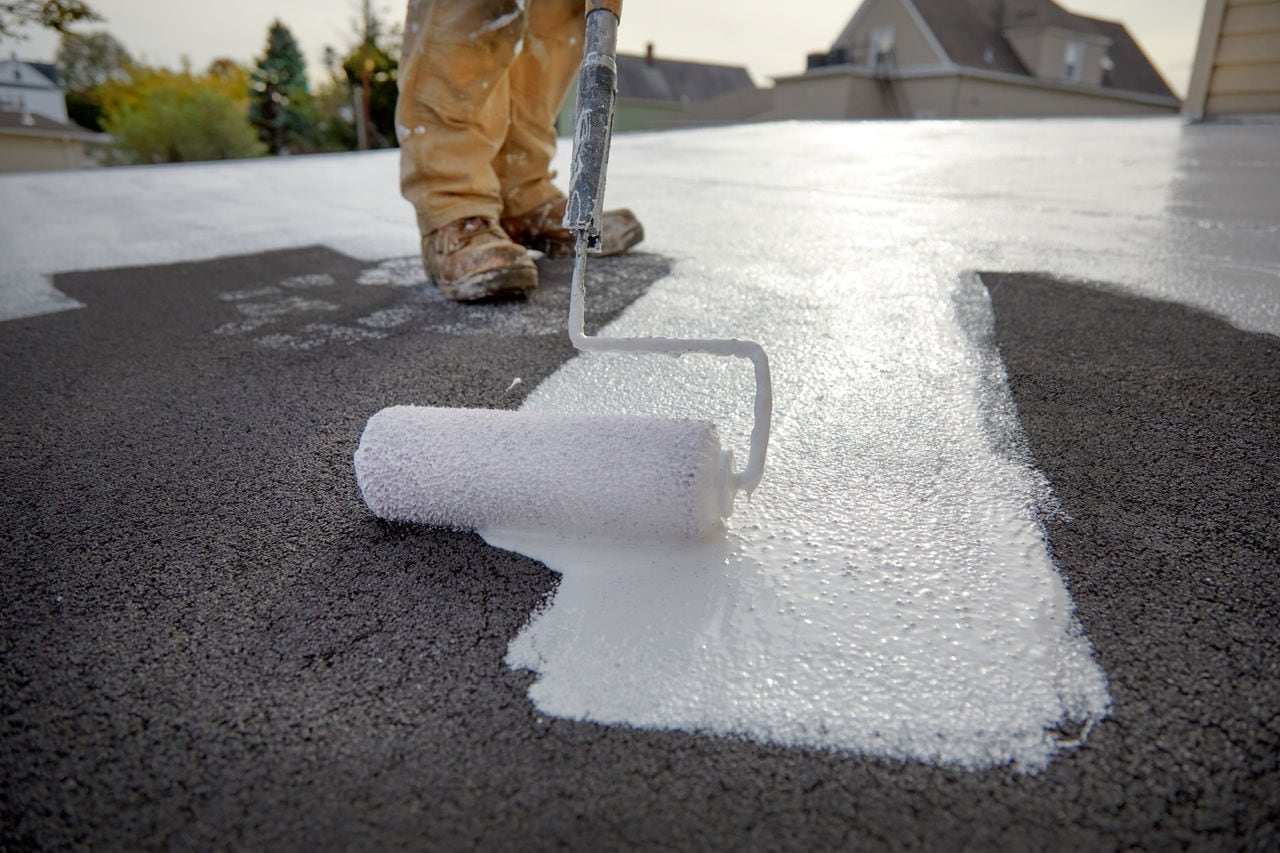
Technical Performance and Asset Life Cycle Summary
To understand the operational and financial impact of choosing a fluid-applied restoration rather than a complete tear-off, the following matrix contrasts the physical behavior, environmental metrics, and lifecycle expectations of modern elastomeric coatings.Performance and Lifecycle Comparison
| Mechanical / Operational Attribute | Fluid-Applied Acrylic / Silicone Restoration | Conventional Full Membrane Tear-Off & Replacement |
| Monolithic Composition | 100% seamless; self-flashing around complex penetrations | Rigid sheets requiring heat-welded or adhesive seams |
| Solar Reflectance Index (SRI) | Typically greater than 100; reflects up to 85% of UV radiation | Variable; dark membranes absorb and transfer thermal energy |
| Structural / Asset Lifetime Impact | Extends asset lifecycle by 10 to 20 years per application cycle | Resets lifecycle clock but carries high capital depreciation |
| Disruption to On-Site Operations | Zero operational downtime; minimal structural loading | Significant noise, toxic vapor risk, and structural exposure |
| Capital Expenditures (CapEx) | 50% to 70% lower than full replacement cost profiles | High material volume costs, labor hours, and disposal fees |